
Walk into any gym and you’ll see people training their bodies.
What you won’t always see is the other battle taking place.
The one happening between their ears.
The average person checks their phone around 80 times a day.
Notifications buzz.
Messages arrive.
Social media feeds never end.
Every spare moment seems to invite another glance at a screen.
The problem isn’t just the time spent scrolling.
It’s what happens afterwards.
Multiple studies have found that after spending time on social media, people perceive their work as more difficult, struggle to focus, and perform at a lower level for hours afterwards. Research has also shown that using a phone before bed negatively impacts sleep quality, recovery, and physical performance.
Perhaps that’s why the average attention span has fallen to just 47 seconds.
For business owners and fitness leaders, this creates a new challenge.
It’s no longer just about starting the day motivated and mentally prepared.
It’s about staying present.
The Zen Master Knew
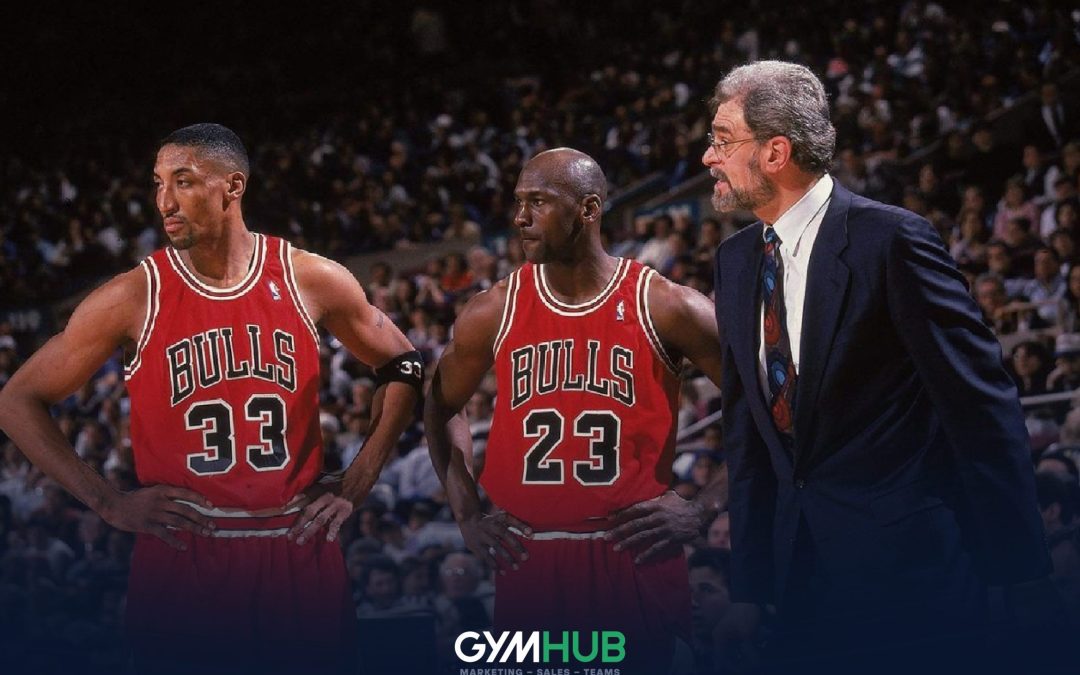
Long before smartphones became a permanent fixture in our lives, legendary NBA coach Phil Jackson understood the importance of mental focus.
Jackson won 11 NBA championships coaching some of the greatest athletes of all time, including Michael Jordan, Kobe Bryant, and Shaquille O’Neal.
He’s famously known as “The Zen Master” because he introduced meditation and mindfulness practices into professional basketball.
At first, many players thought it was strange.
But Jackson believed that learning to quiet the noise and control attention was a competitive advantage.
Eventually, players developed the ability to come off the court after a bad call, a turnover, or a mistake, sit on the bench, breathe, reset, and refocus on the next play.
That ability to move on quickly became part of what made them successful.
Why This Matters in Business
The challenges Phil Jackson’s players faced aren’t that different from the challenges fitness leaders face today.
Athletes worried about injuries, mistakes, trades, and criticism.
Today’s gym owners and managers face a different version of the same pressure.
A staff member misses a sale.
A member cancels.
A negative review appears online.
A social media comment stings.
A team member makes a mistake.
The natural tendency is to replay those moments over and over again.
But while you’re dwelling on the last problem, the next opportunity is already in front of you.
A consultation needs your attention.
A team meeting needs your leadership.
A member needs encouragement.
Success often comes down to how quickly you can refocus on what matters right now.
Training the Mind
The encouraging part is that focus can be trained.
Studies show that an eight-week mindfulness practice can reduce reflexive phone-checking by as much as 60%.
Even just 10 minutes a day can improve attention and concentration.
The key is finding an approach that works.
Phil Jackson didn’t force everyone into a single method. Alongside meditation, he experimented with breathing exercises, mindfulness practices, and journaling.
He also understood something important about leadership.
People rarely commit to a process simply because they’re told to.
They need to understand why it matters.
His message was simple:
If a practice helps you focus, perform better, and achieve your goals, it’s worth considering.
The Most Important Training of All
As fitness professionals, we spend a lot of time thinking about physical training.
Programming.
Coaching.
Technique.
Recovery.
But in a world designed to constantly distract us, mental training may be more important than ever.
The ability to let go of the last mistake.
The ability to ignore the noise.
The ability to focus fully on the member standing in front of you.
Those aren’t talents.
They’re skills.
And like any skill, they improve with practice.
For today’s fitness leaders, the battle for the six inches between your ears may be the most important training you’ll ever do.

